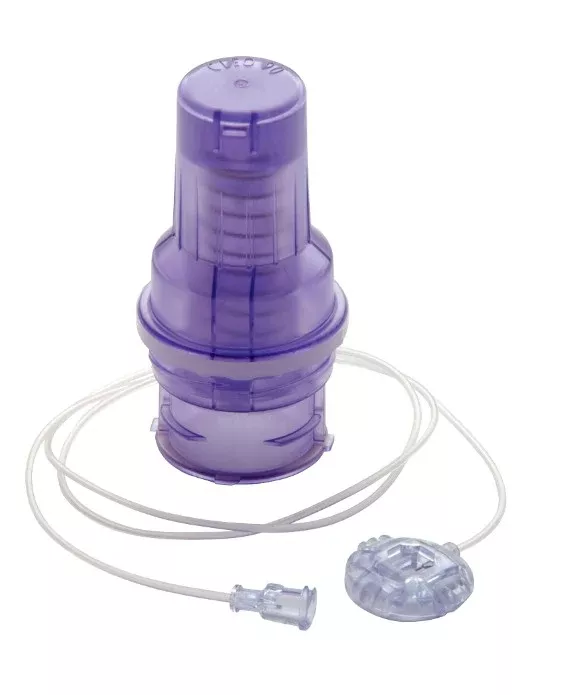
This listing is for one box of 10 Cleo 90 Infusion Sets with 24-inch tubing and a 9 mm cannula (product code 21-7230-24). It is sold as a box of 10 individual sterile sets. This is the 24-inch version of the Cleo 90 line by ICU Medical.
The Cleo 90 is a single-use subcutaneous infusion set. It is designed for 90-degree insertion and has a soft, flexible 9 mm cannula. The set includes an automatic needle retraction feature that pulls the introducer needle back after insertion. It connects to an insulin pump using a standard Luer lock fitting with a 360-degree rotating connection at the site. ICU Medical makes this set for home use.
The 24-inch tubing length gives you more reach between the infusion site and your pump. This is useful if you wear your pump in a pocket, clipped to a waistband, or carried in a bag. The extra tubing length reduces tension on the site when you move around.
What’s in the Box:
- 10 sterile single-use infusion sets
- 9 mm soft flexible cannula per set
- 24-inch (61 cm) tubing per set
- Transparent adhesive dressing included
Key Features:
- 90-degree insertion angle
- Automatic needle retraction after insertion
- 28-gauge introducer needle, 25-gauge cannula
- 360-degree rotating Luer lock connection
- Priming volume: 0.003 mL (9 mm cannula)
- Hypoallergenic, breathable adhesive dressing
- One-handed insertion design
Intended Use:
The Cleo 90 infusion set is used for subcutaneous infusion therapy, including insulin delivery with an insulin pump.
The Cleo 90 is an all-in-one infusion set. The introducer needle and cannula are housed together in a single device. You do not need a separate insertion tool. After you press the set against your skin and hear a click, the introducer needle retracts automatically. This reduces the risk of an accidental needlestick after insertion.
The adhesive dressing is transparent so you can see the insertion site. It is designed to let skin breathe and to resist moisture during everyday activity.
The 360-degree rotating connector at the site lets the tubing turn in any direction. This means you can move your pump without twisting or pulling on the cannula.
Important: Do not fill the tubing with insulin or medication while the infusion set is still connected to your body. Doing this can deliver an unintended dose. Always disconnect before priming the set. Follow your pump manufacturer’s priming instructions.
For the full list of instructions, warnings, and contraindications, refer to the Instructions for Use (IFU) included in the box.
The 9 mm number refers to how far the soft cannula sits under your skin after insertion. A 9 mm cannula is a common choice for many body types. If you are unsure which cannula length is right for you, ask your diabetes care team.
The 24-inch version has shorter tubing. It works well if you wear your pump close to the infusion site, such as clipped to your waistband near your abdomen. The 43-inch version is for people who carry their pump further away, such as in a thigh holster or a bag.
The Cleo 90 uses a standard Luer lock connector. This fits most insulin pumps that accept Luer lock infusion sets. Check your pump’s manual or ask your pump manufacturer to confirm compatibility before ordering.
Most insulin pump users change their infusion set every 2 to 3 days. Follow the instructions from your diabetes care team and your pump manufacturer for the recommended wear time.
Coverage for infusion sets varies depending on your province and your insurance plan. In Alberta, infusion sets may be covered under the Alberta Insulin Pump Program (AIPP) for eligible patients. In Ontario, the Assistive Devices Program (ADP) covers insulin pump supplies for eligible users. Contact your provincial health program or private insurer to confirm what is covered under your plan.
No. The Cleo 90 is a single-use device. It is sterile and intended for one insertion only. Do not reuse, re-sterilize, or reinsert a used set.
The Cleo 90 is designed for subcutaneous infusion therapy. Whether it is compatible with a specific insulin formulation depends on your pump and your prescriber’s guidance. Ask your diabetes care team before changing your insulin type.